
Banteay Chhmar Temple
Explore the monumental Khmer temple complex and its remarkable stone carvings.
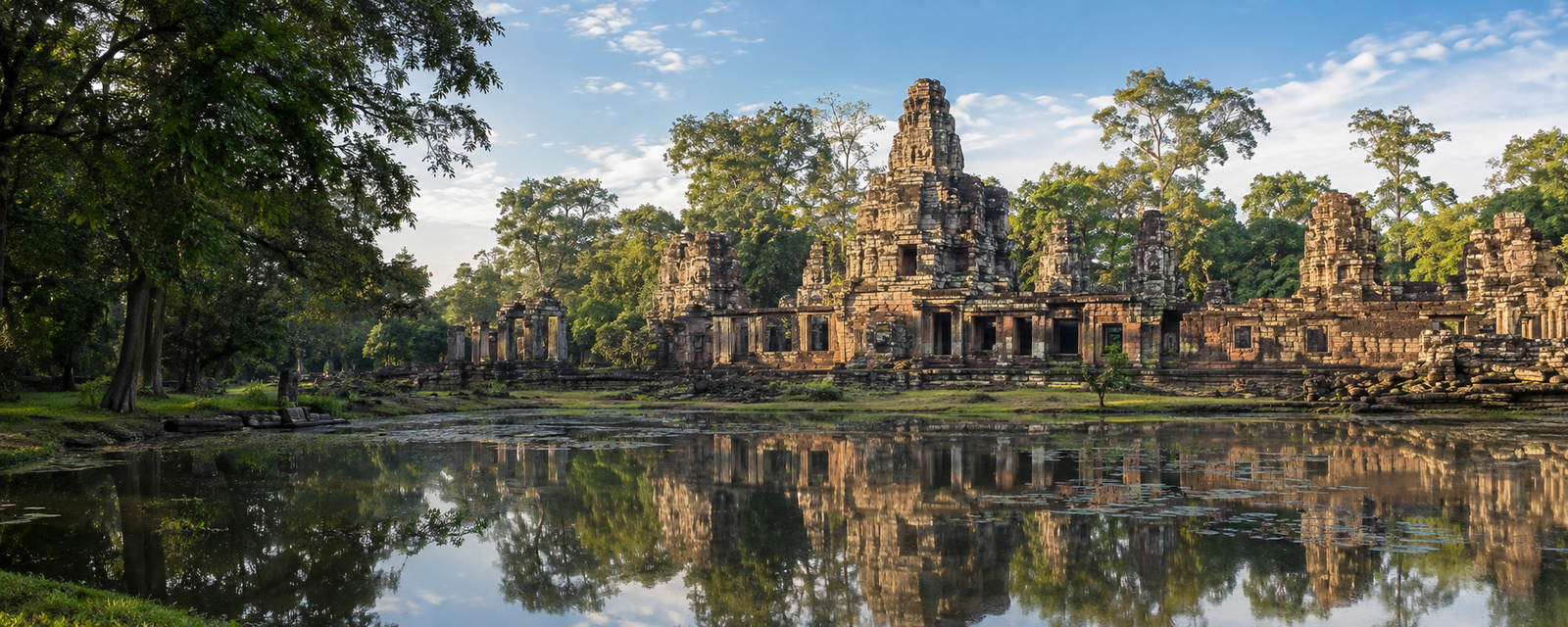
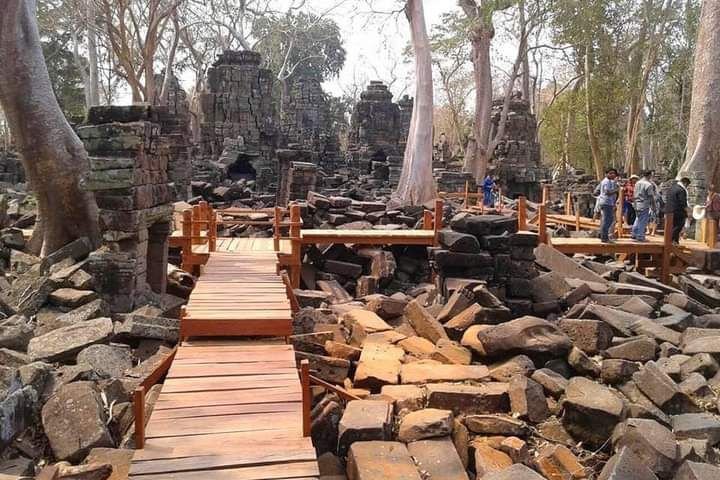
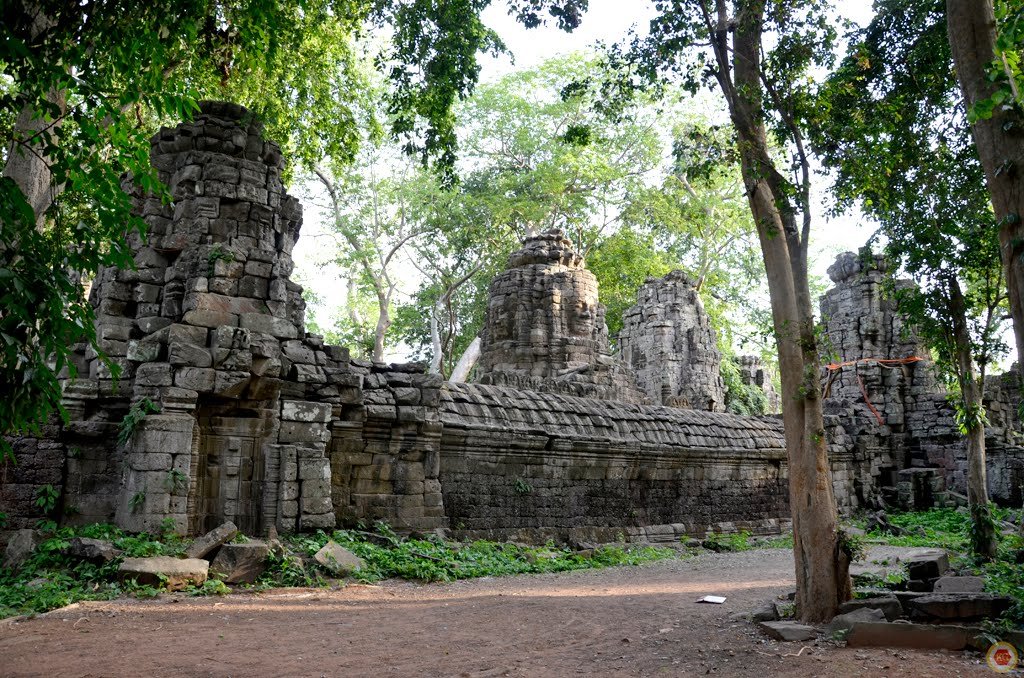
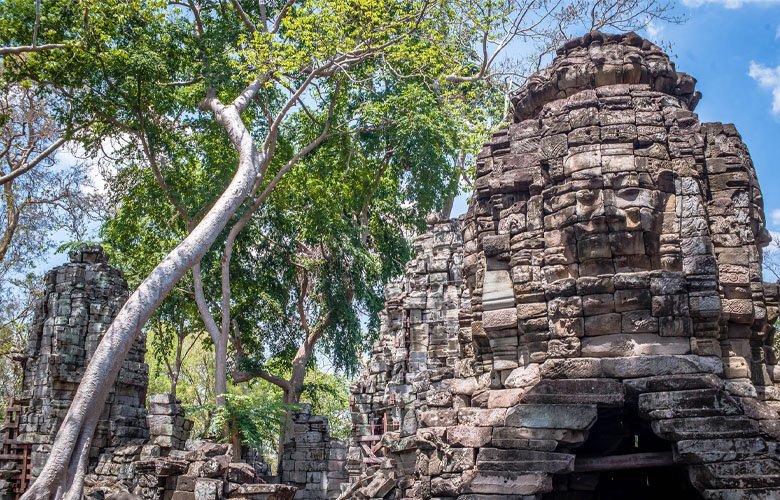
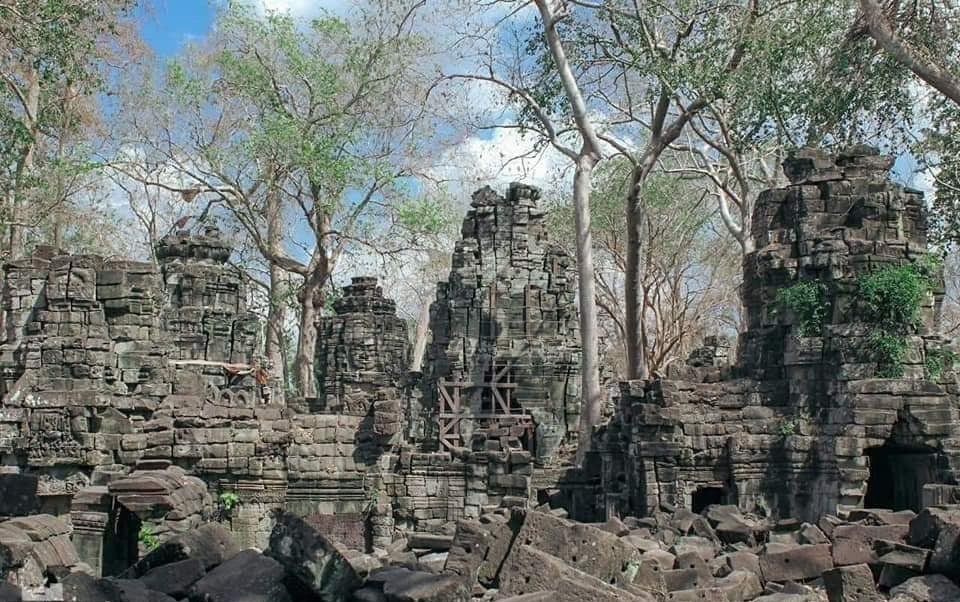
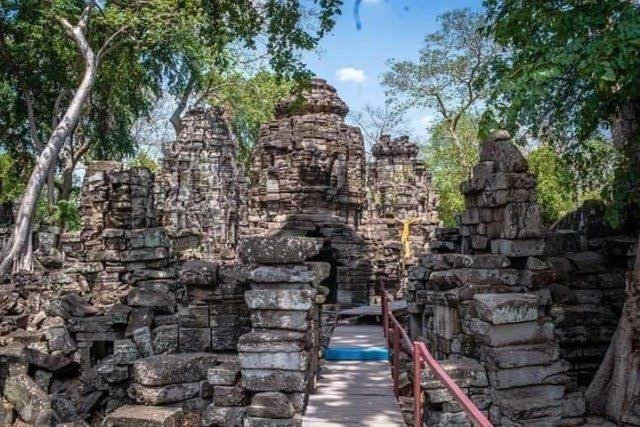
Banteay Chhmar Temple is an ancient temple believed to have been constructed from the late 12th to the early 13th century during the reign of King Jayavarman VII. The temple was dedicated to his son and four military commanders who sacrificed their lives in the battle against the Cham in 1177.
Banteay Chhmar Temple is located in Banteay Chhmar Village, Banteay Chhmar Commune, Thma Puok District, Banteay Meanchey Province, approximately 59 kilometers north of the provincial capital of Banteay Meanchey.
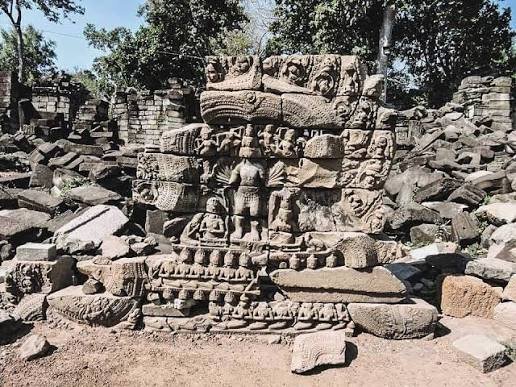
It has been observed that on the walls, or the first inner enclosure, located outside the galleries, there is hardly a single stone slab without carvings. Scholars, experts, professors, and prominent national and international speakers who have visited and personally examined the temple have expressed great interest in the extensive variety of sculptures found along its walls, galleries, and first enclosure.
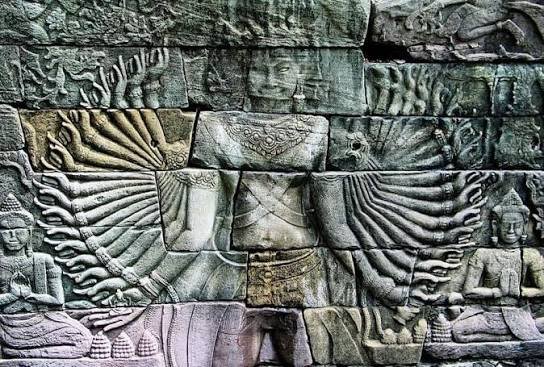
These carvings depict numerous Hindu deities, including Brahma, Narayana (Vishnu), Shiva (Ishvara), and other important figures from Hindu religious traditions. Among the most significant sculptures is the image of Avalokiteshvara with 32 arms, a bodhisattva of Mahayana Buddhism. It is accompanied by an image of Avalokiteshvara with 16 arms, of which only one remains today. A similar sculpture that once stood at the southern corner was stolen by looters, leaving only historical photographs as a record of its existence.[1]
The bas-reliefs on the walls of Banteay Chhmar Temple also depict a battle between a human figure and a figure with a giant-like head. According to G. Cœdès, the story represented in this carving is mentioned in the Khmer inscription K. 227. The inscription describes a battle between Prince Srindrakumara, the son of King Jayavarman VII, and Bhārata Rāhu (Rāhu). Two of the prince's guardians willingly sacrificed their lives in order to protect and save him.[2]
During restoration work on the Baray Mebon reservoir at Banteay Chhmar Temple, a lion sculpture was discovered on 3 February 2020.
Banteay Chhmar Temple was constructed during the reign of King Jayavarman VII, between approximately 1181 and 1218 CE. It was a temple dedicated to Mahayana Buddhism. King Jayavarman VII built the temple to commemorate the spirits of his son, Srindrakumara, and his four military commanders, who sacrificed their lives during the bloody battles against the Cham at that time.
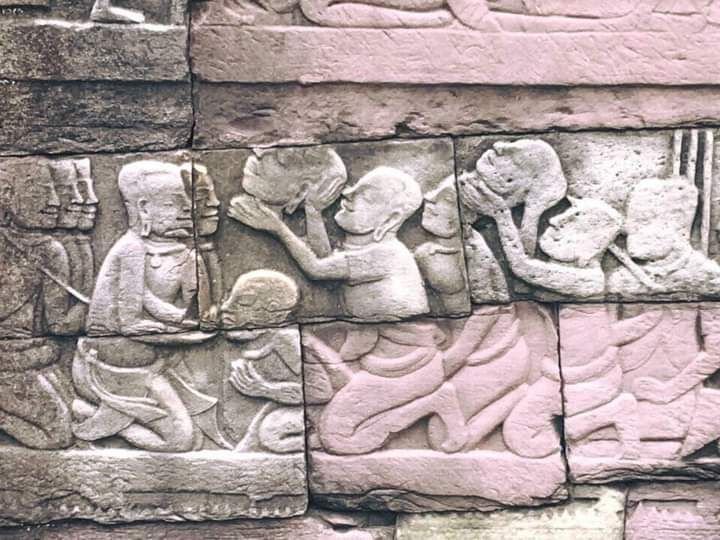
The galleries of Banteay Chhmar contain remarkable bas-reliefs depicting historical events, religious ceremonies, royal activities, Khmer–Cham battles, daily life, and activities in the marketplace, among many other subjects. In this respect, the carvings share similarities with those found at Bayon Temple.
Source: Extracted from CEN News (www.cen.com.kh).
Banteay Chhmar Temple is located in Banteay Chhmar Village, Banteay Chhmar Commune, Thma Puok District, Banteay Meanchey Province, approximately 59 kilometers north of the provincial capital of Banteay Meanchey.
It has been observed that on the walls, or the first inner enclosure, located outside the galleries, there is hardly a single stone slab without carvings. Scholars, experts, professors, and prominent national and international speakers who have visited and personally examined the temple have expressed great interest in the extensive variety of sculptures found along its walls, galleries, and first enclosure.
These carvings depict numerous Hindu deities, including Brahma, Narayana (Vishnu), Shiva (Ishvara), and other important figures from Hindu religious traditions. Among the most significant sculptures is the image of Avalokiteshvara with 32 arms, a bodhisattva of Mahayana Buddhism. It is accompanied by an image of Avalokiteshvara with 16 arms, of which only one remains today. A similar sculpture that once stood at the southern corner was stolen by looters, leaving only historical photographs as a record of its existence.[1]
The bas-reliefs on the walls of Banteay Chhmar Temple also depict a battle between a human figure and a figure with a giant-like head. According to G. Cœdès, the story represented in this carving is mentioned in the Khmer inscription K. 227. The inscription describes a battle between Prince Srindrakumara, the son of King Jayavarman VII, and Bhārata Rāhu (Rāhu). Two of the prince's guardians willingly sacrificed their lives in order to protect and save him.[2]
During restoration work on the Baray Mebon reservoir at Banteay Chhmar Temple, a lion sculpture was discovered on 3 February 2020.
Banteay Chhmar Temple was constructed during the reign of King Jayavarman VII, between approximately 1181 and 1218 CE. It was a temple dedicated to Mahayana Buddhism. King Jayavarman VII built the temple to commemorate the spirits of his son, Srindrakumara, and his four military commanders, who sacrificed their lives during the bloody battles against the Cham at that time.
The galleries of Banteay Chhmar contain remarkable bas-reliefs depicting historical events, religious ceremonies, royal activities, Khmer–Cham battles, daily life, and activities in the marketplace, among many other subjects. In this respect, the carvings share similarities with those found at Bayon Temple.
Source: Extracted from CEN News (www.cen.com.kh).
Destination
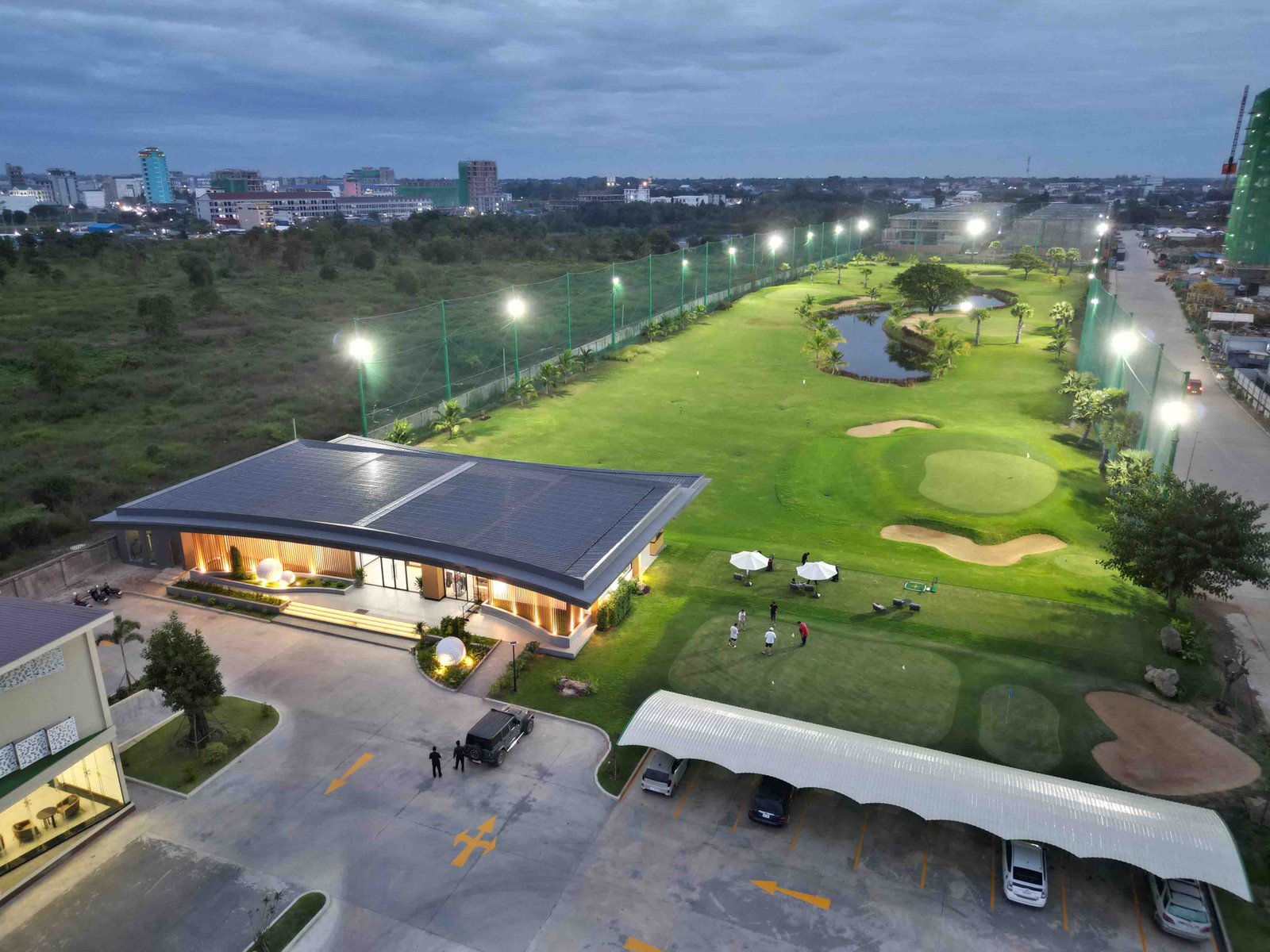
Richie Golf
Welcome to Richie Golf
Read more →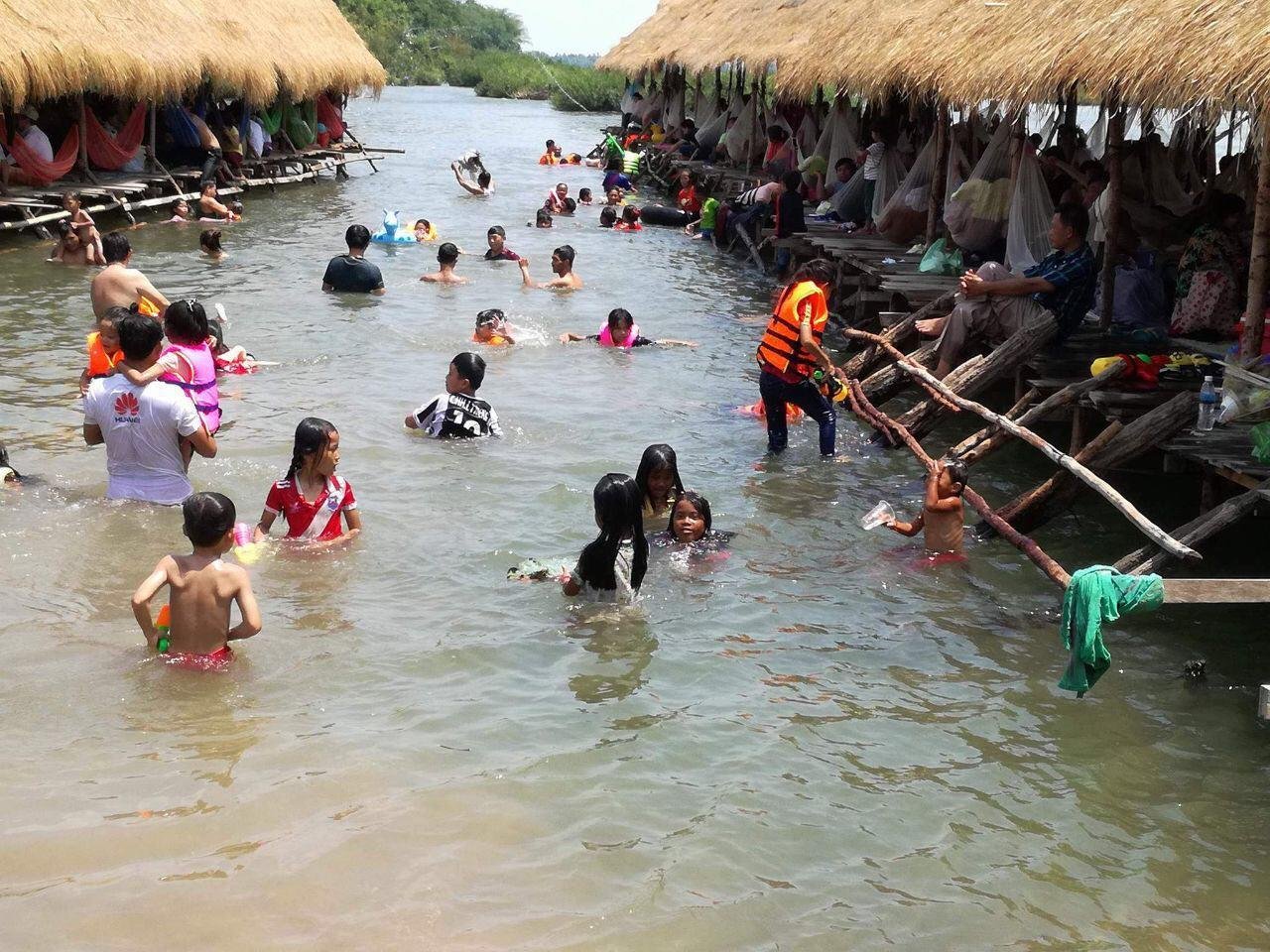
Destination
A variety of natural attractions
Tourist Attractions and Recreational Destinations in Poipet City, Banteay Meanchey Province
Read more →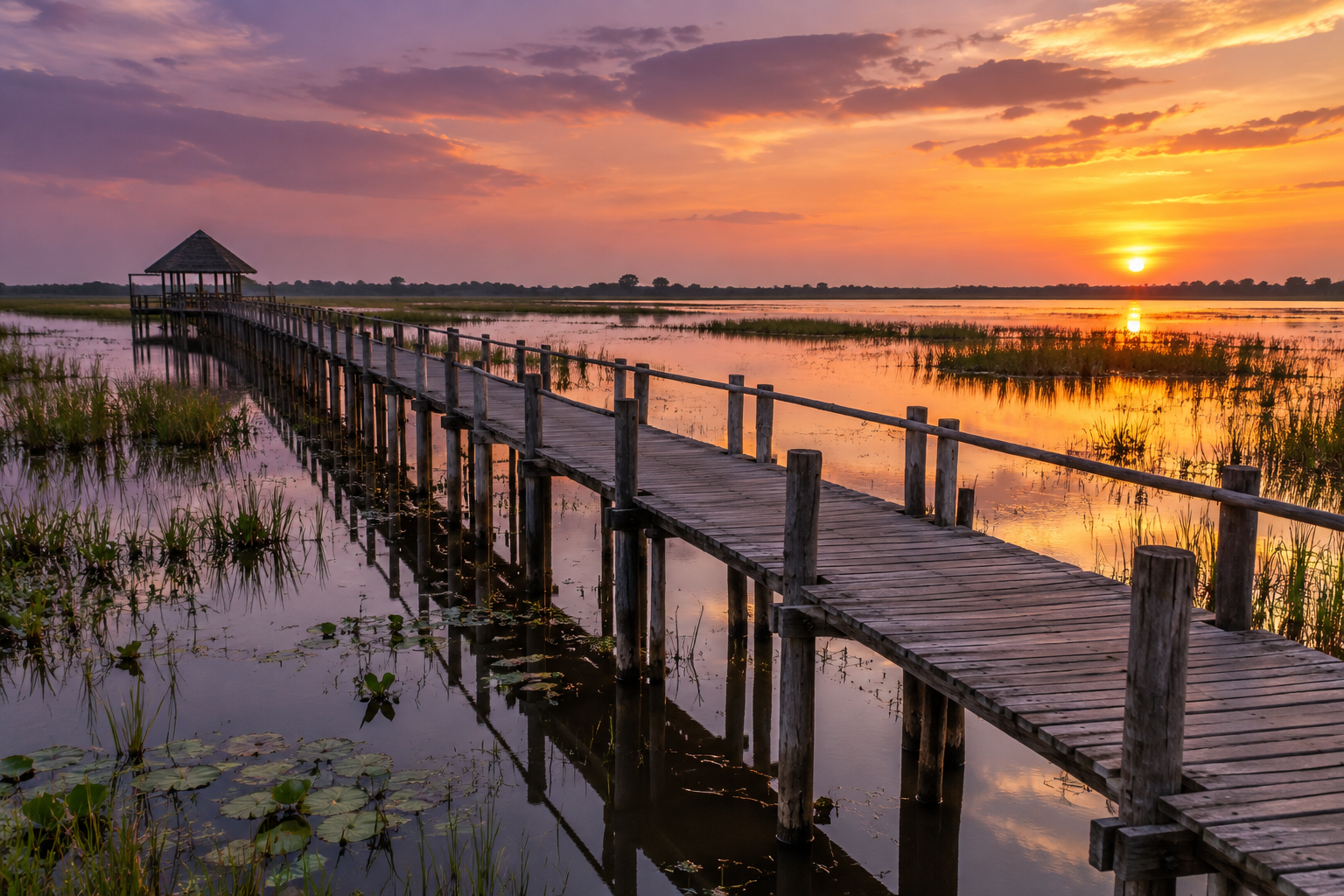
Destination
Trapeang Thmor Lake
Discover peaceful wetlands, wide horizons and spectacular sunsets.
Read more →